Plant Stand Ideas for Every Room | 60+ Indoor Plant Shelf & Styling Proven Ideas
Plant Stand Ideas for Every Room: The Complete Indoor Plant Shelf & Styling Guide
If your plants are still sitting on the floor in their nursery pots, you’re missing the easiest upgrade in home decor. A plant stand does more than look good — it lifts your greenery into better light, improves airflow around the roots, protects your floors from water damage, and turns a random pot into an actual design moment. It’s the difference between “I have some plants” and “my home looks like a plant shop.”
The tricky part isn’t finding a plant stand. It’s finding the right one for the room you’re actually decorating — because what works in a sun-drenched sunroom will rot in a steamy bathroom, and what looks perfect in a minimalist living room will disappear in a cluttered walk-in closet.
This guide breaks down plant stand and shelf ideas room by room, plus DIY builds, buying advice, and the plants that actually thrive on each style of stand. Whether you’re working with a studio apartment or a full conservatory, there’s a setup here that fits.
Jump to a section:
- Types of Plant Stands & Materials
- Living Room Plant Stand Ideas
- Bedroom Plant Stand Ideas
- Bathroom Plant Stand Ideas
- Kitchen Plant Stand Ideas
- Home Office Plant Stand Ideas
- Sunroom & Conservatory Ideas
- Closet & Walk-In Closet Ideas
- Hallway, Staircase & Entryway Ideas
- Small Apartment & Studio Ideas
- DIY Plant Stand Ideas
- How to Choose the Right Plant Stand
- FAQs
Types of Plant Stands & Materials: A Quick Primer
Before diving into rooms, it helps to know what you’re choosing between. Three material families currently dominate indoor plant stand design, and each suits different rooms and climates:
- Mid-century wood (acacia, walnut, oak): Warm tones that patina over time. Best in living rooms and dens, where the stand can double as a side table.
- Bamboo, tiered units: Lightweight, renewable, and naturally moisture-resistant — which makes bamboo the standout material for humid rooms like bathrooms and sunrooms.
- Black metal / industrial pipe: Minimal footprint, strong visual contrast, and typically the most weight-capable option for large or heavy pots.
On top of material, think in terms of format:
- Tiered/ladder stands — multiple plants, one footprint, great for corners
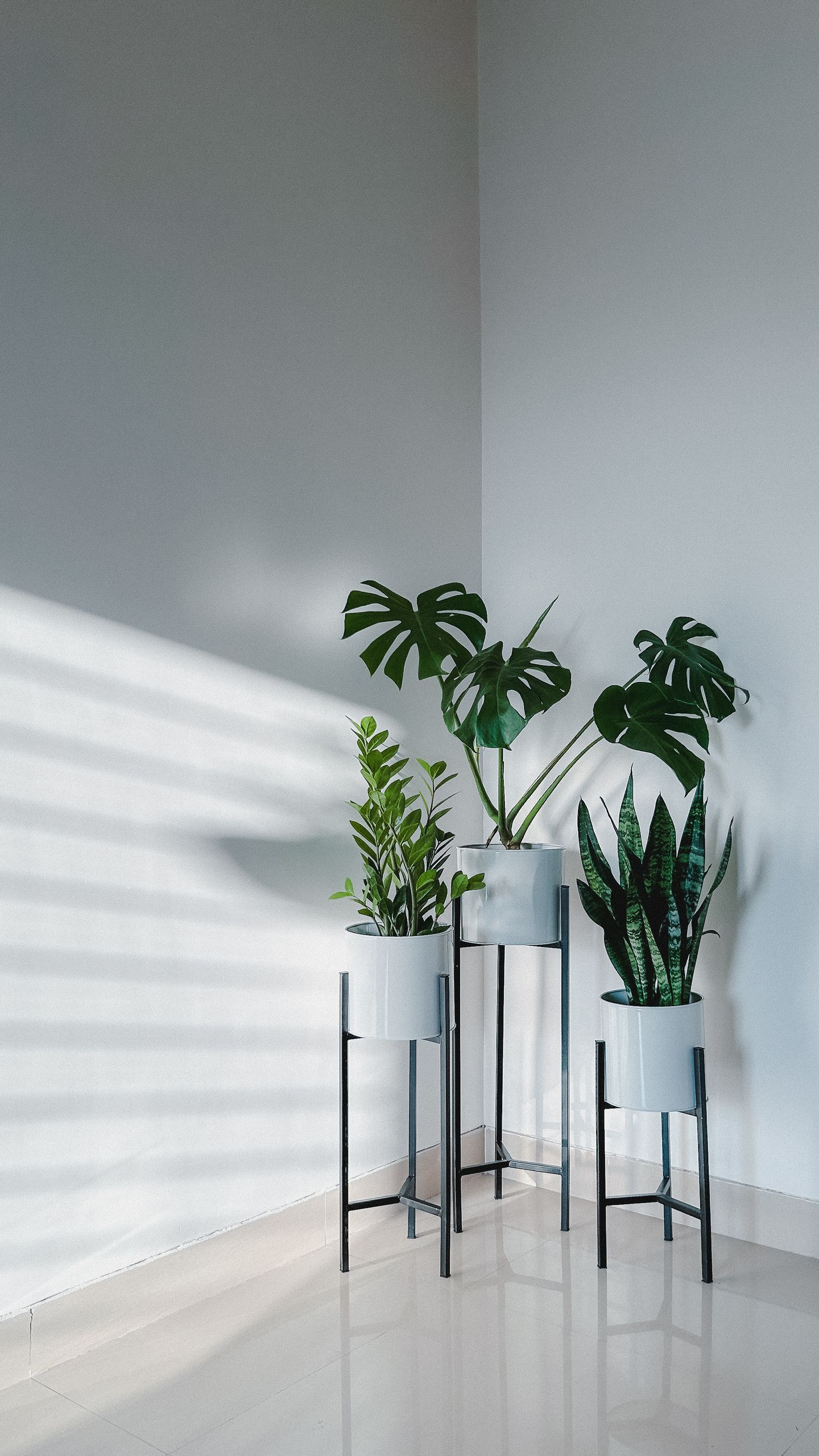
- Pedestal stands — a single statement plant, elevated
- Floating shelves — zero floor space used, ideal for renters and small rooms
- Rolling/caster stands — for sun-chasing plants that need to move with the light
- Wall-mounted or rail systems — modular, expandable, great for a “living wall” look
- Hanging stands/macramé — for trailing plants and rooms with no spare floor or shelf space
Weight capacity matters more than most people expect. A solid wood or metal stand rated for 40–50 lbs will safely hold a mature fiddle-leaf fig or full ceramic pot, while a light acrylic stand looks great with succulents but can sag under wet soil within months.
Living Room Plant Stand Ideas
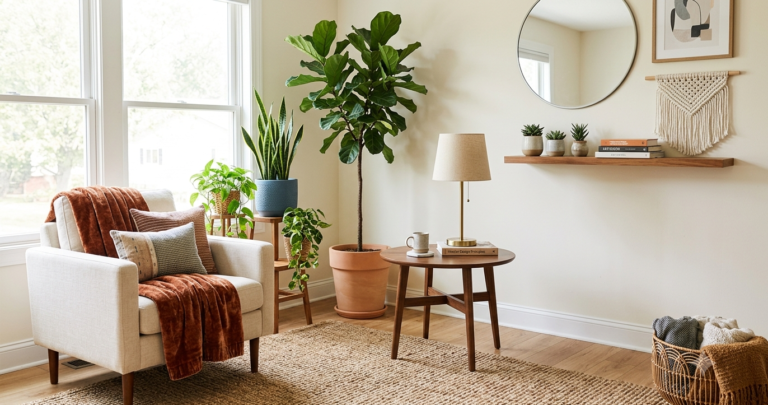
The living room is where plant stands get to be furniture, not just function. This is the room for statement pieces.
- Tiered mirrored or round-tier stands in a corner create a focal point without eating into your seating layout.
- A single tall pedestal for one dramatic plant — a monstera, fiddle-leaf fig, or bird of paradise — works as living sculpture beside a sofa or armchair. 2026’s styling trend leans toward fewer, bigger, more architectural plants rather than a scattered collection.
- Rattan or woven stands bring texture and a coastal, relaxed feel; pair with a trailing plant like pothos so the foliage softens the woven base.
- Wall-mounted “plant art” shelves keep the floor completely clear while still creating a green focal point — ideal if you want greenery without disrupting an open floor plan.
- Corner ladder stands turn dead 90-degree space into a layered display of three or four plants at different heights.
Styling tip: Group plants with similar light and water needs on the same stand — it looks more curated and makes care routines dramatically easier.
Bedroom Plant Stand Ideas
Bedrooms call for calmer, quieter plant displays that support rest rather than compete with it.
- A small stool or short pedestal beside the bed works well with a low-light, air-purifying plant like a pothos or peace lily.
- Slim floating shelves above a headboard let trailing plants cascade down the wall without taking up nightstand space.
- Corner-tiered racks are ideal if you want a small indoor garden but have limited floor space to spare.
- Ladder-style vertical stands near a window use natural light efficiently while keeping the footprint narrow.
Stick to two or three plants per bedroom rather than a full jungle — the goal is a calming accent, not a greenhouse you have to navigate around at 2 a.m.
Bathroom Plant Stand Ideas
Bathrooms are one of the most underrated rooms for houseplants — the humidity from showers and baths mimics a tropical environment that many plants genuinely love. The challenge is choosing a stand that can handle moisture and a room that often has limited light.
Best plant stand ideas for bathrooms:
- Bamboo tiered stands — bamboo’s natural moisture resistance makes it the go-to material for bathroom humidity swings.
- Floating shelves above the toilet or sink turn dead vertical space into a display without touching the floor. Just watch for water dripping from misted leaves.
- Repurposed ladders leaned against the wall, treated with waterproof varnish, hold trailing plants at varying heights and cost next to nothing.
- A small stool or vintage bar cart elevates one plant near the tub, keeping it out of splash range while adding height variation.
- Corner slim towers make use of the awkward, often-wasted corner near the shower — prime plant real estate that’s easy to overlook.
- Metal wall rails with magnetic or hook-mounted pots let you rearrange your display anytime, best for smaller, lightweight pots.
Plants that actually thrive in a bathroom: pothos, snake plant, ZZ plant, peace lily, bromeliads, ferns (especially Boston fern), calathea, and air plants. Most of these tolerate the low-light, high-humidity combo that trips up plants elsewhere in the house. If your bathroom has zero windows, lean on snake plants, ZZ plants, and cast iron plants — all three tolerate near-total darkness.
Practical tip: keep a hygrometer in the room and aim for 40–60% humidity, and make sure the space has some ventilation so moisture doesn’t encourage mold on wood stands.
Kitchen Plant Stand Ideas
Kitchens are the natural home for herb gardens and compact greenery — you want stands that are easy to wipe down and won’t mind the occasional splash or steam.
- Windowsill trays or narrow shelf stands keep an herb garden within arm’s reach of the stove.
- Small tiered metal racks on an open counter section maximize a tight footprint without blocking prep space.
- Hanging shelves near a kitchen window are ideal for trailing plants like ivy, kept safely away from heat sources.
- Choose rot-resistant materials (metal or sealed wood) if the stand sits near a sink or stovetop, and keep any wooden stand a safe distance from direct heat.
Home Office Plant Stand Ideas
A well-placed plant near a desk does double duty: it looks good on video calls, and a small grouping of low-maintenance plants near a workspace has been linked to reduced stress and better focus.
- A slim corner stand behind your monitor adds greenery to your camera frame without crowding your desk.
- A low tiered stand beside a bookshelf blends plants with books and decor for a “curated study” look.
- Floating shelves with built-in LED grow lights solve the classic home-office problem — windowless rooms — by giving plants a light source that also functions as ambient lighting.
Sunroom & Conservatory Plant Stand Ideas
If you have a sunroom, solarium, or conservatory, you’ve essentially got a built-in indoor greenhouse — and 2026’s design trend treats these rooms as dedicated, wellness-focused plant sanctuaries rather than catch-all “bonus rooms.”
- Rolling multi-tier stands with locking casters let sun-loving plants chase the light throughout the day, or roll outside on warm afternoons.
- A ladder-style shelf spanning the length of a window wall maximizes every inch of light-filled real estate.
- Curated groupings on staggered-height stands — rather than scattering individual pots — is the defining sunroom trend for 2026: intentional clusters that read as “living furniture.”
- A narrow wooden window-sill tray works well for a soil-free display of air plants if you want the “collected” look without heavy pots.
- A small trellis paired with a climbing hoya or philodendron trains vertical growth instead of letting the plant sprawl into a walking path.
Because many sunrooms aren’t fully insulated, remember that most houseplants struggle below 60°F — if your conservatory gets cold in winter, group plants toward the interior wall or add a small space heater during the coldest months.
Closet Plant Stand Ideas (Yes, Really)
A walk-in closet might be the last place you’d think to add plants, but a green accent shelf can make even a windowless dressing room feel considered and finished. The catch: most closets have zero natural light, so success depends entirely on plant choice and, often, a grow light.
- A slim floating shelf along one wall holds a row of snake plants or ZZ plants — both nearly indestructible in low light and both excel at nighttime oxygen production.
- Trailing pothos draped over a high shelf creates a “green waterfall” effect that softens rows of clothing and shelving.
- Full-spectrum LED strip lights tucked under shelving are the real secret weapon here — modern grow lights are slim and unobtrusive, not the bulky purple lamps of the past, so they blend into the shelf edge instead of standing out.
- Grouped “botanical pockets” — clustering three or four plants together on one shelf rather than spacing them out — mimics a denser, more intentional look and makes a small footprint feel styled rather than sparse.
Stick to snake plant, ZZ plant, pothos, and Chinese evergreen for closets — all four are proven low-light performers that won’t demand daily attention.
Hallway, Staircase & Entryway Plant Stand Ideas
Narrow, high-traffic spaces need stands that don’t eat into your walking clearance.
- Tall, slim pedestal stands (12–18 inches deep) fit narrow hallways without blocking the path — measure your walkway before buying.
- A single plant beside a staircase — a tall, slim-trunked tree with airy leaves — reads as architectural rather than cluttered, and doesn’t disrupt the sightline up the stairs.
- A console table with a plant on one end at the entryway is an easy way to greet guests with greenery without dedicating an entire stand to the space.
- Keep hallway plants below eye level or well above head height — anything in between becomes something people bump into.
Small Apartment & Studio Plant Stand Ideas
When square footage is tight, the goal shifts from “where do I put a stand” to “how do I get height without losing floor space.”
- Vertical ladder stands fit slim windows and stage multiple plants without spreading out — they’re the single best format for small apartments.
- Corner stands (4–6 tiers) fill the 90-degree angles that are otherwise wasted in almost every small room.
- Floating shelves are the top pick when floor space is truly non-negotiable — they keep plants elevated without occupying any walking space.
- Hanging shelves or macramé holders free up the floor entirely, though installation requires a stud finder and secure anchors for anything heavier than a small pot.
- Modular cube or two-tier stands with built-in storage let a plant stand double as a side table, which matters a lot in a studio where every piece of furniture needs to earn its footprint.
DIY Plant Stand Ideas on a Budget
You don’t need a furniture budget to get a great-looking stand. Some of the most-loved plant displays are built from repurposed materials:
- Old wooden ladder: Lean it against a wall, and each rung instantly becomes a shelf for a different pot size. A full lumber build costs as little as $20–30 and takes an afternoon.
- Stacked cinder blocks: Extremely stable, budget-friendly, and easy to reconfigure into different heights — great for heavier pots or an industrial look.
- Wooden crates: Stack and stagger them for a tiered, rustic display; add casters to the base for a mobile version you can roll toward the sun.
- Upcycled stool or chair: Sand, paint, or seal an old stool and you’ve got an instant pedestal — often free if you already own the piece.
- PVC pipe frames: Lightweight, waterproof, and fully customizable with T-joints and elbows; spray-paint matte black to hide the plumbing-supply look.
- Repurposed drawer: Add short legs or mount it to a wall for a compact stand that suits succulents or a row of small pots.
Build tip: if a wooden stand will live somewhere humid (bathroom, kitchen, sunroom), always seal it with a waterproof varnish or polyurethane coat — untreated wood will warp or rot within a season.
How to Choose the Right Plant Stand (Buying Guide)
A few practical questions will narrow down your options faster than scrolling endless inspiration photos:
- How much weight will it hold? A mature plant in a wet, soil-filled ceramic pot is heavier than it looks. Match the stand’s weight rating to your pot, not just the plant.
- What’s the humidity level in the room? Bamboo and sealed/treated wood handle humidity best; unsealed wood and cheap particleboard don’t belong in bathrooms or sunrooms.
- How much natural light does the plant need? Stands near windows suit sun-lovers; lower or rear tiers and closet shelves should hold low-light plants like pothos, snake plant, or ZZ plant.
- How much floor space can you actually give up? If the answer is “none,” go floating shelf or wall-mounted before considering a floor stand.
- Do you rent? Ladder stands, freestanding pedestals, and stacked-crate builds require zero wall damage — a better fit than drilled shelving if you’ll be moving.
Frequently Asked Questions
What’s the best plant stand material for a humid room like a bathroom? Bamboo and sealed hardwood handle humidity best. Metal with a powder-coated finish is also a solid, rust-resistant choice for steamy rooms.
Can I put a real plant stand in a closet with no windows? Yes — pair a low-light plant like a snake plant, ZZ plant, or pothos with a slim LED grow light tucked under a shelf, and it will thrive without any natural light at all.
How tall should a plant stand be? Most stands range from 12 to 36 inches. Choose height based on the plant’s mature size and the sightline you want — taller stands for statement plants, shorter risers for tabletop groupings.
What’s the cheapest way to get a plant stand? Repurpose what you already own: an old ladder, a stool, stacked crates, or even upside-down terracotta pots. Most of these builds cost under $30 in materials.
How do I stop water from damaging my wooden plant stand? Use a waterproof saucer or liner tray under every pot, and seal any wood stand with polyurethane or a waterproof varnish, especially in bathrooms, kitchens, or sunrooms.
Do plant stands actually help plants grow better, or are they just decorative? Both. Elevating a plant improves airflow around the leaves and roots, gets it closer to a light source, and makes even watering easier — on top of the obvious styling benefit.
Final Thoughts
The best plant stand setup isn’t the most expensive one — it’s the one that matches your room’s light, humidity, and floor space, and actually makes it easier to care for what you’re growing. Start with one room, one stand, and a plant that suits the conditions you already have. Once you see how much a simple stand changes the way a corner feels, it’s hard to stop at just one.