The latest indoor plant styling ideas (2026 Guide)
How to Style Indoor Plants Like a Professional Interior Designer
Let’s be honest: you’ve bought the pothos. You’ve bought the fiddle leaf fig everyone on Pinterest swears by. You even bought the “designer” ceramic pot. And somehow your living room still looks like a garden center clearance aisle instead of the plant-filled sanctuary you had in mind.
You’re not bad at plants. You’re missing the styling system that interior designers actually use — the one that has nothing to do with how much you spend and everything to do with how intentionally you arrange what you already own.
This guide breaks down indoor plant styling ideas the way a professional would explain them: as a repeatable design system built on height, texture, grouping, and negative space — not luck. By the end, you’ll have room-by-room plant decor ideas, a pot-pairing cheat sheet, and a checklist you can use every time you bring a new plant home.
Why Most Plant Styling Feels Random — And How to Fix It
Most people style plants the way they shop for them: one at a time, wherever there’s an empty corner. A plant goes on the windowsill because there’s space. Another lands on the coffee table because it looked nice at the store. Nothing is wrong individually, but nothing is talking to each other either.
Interior designers approach greenery differently. They treat every plant as a piece of furniture — something with a height, a shape, a texture, and a specific job to do in the room. Once you start thinking about indoor plant arrangement as composition rather than collection, the “randomness” disappears almost overnight.
That shift in mindset is really the whole secret. The five principles below are the exact framework designers lean on to turn a handful of houseplants into a cohesive, styled vignette.
The 5 Core Principles of Plant Styling
These five rules apply whether you own three plants or thirty. Learn them once, and you’ll be able to style any surface in your home — shelf, console table, windowsill, or bare corner — with the same confidence a designer brings to a client’s living room.
1. The Rule of Three — Odd Numbers Always Win
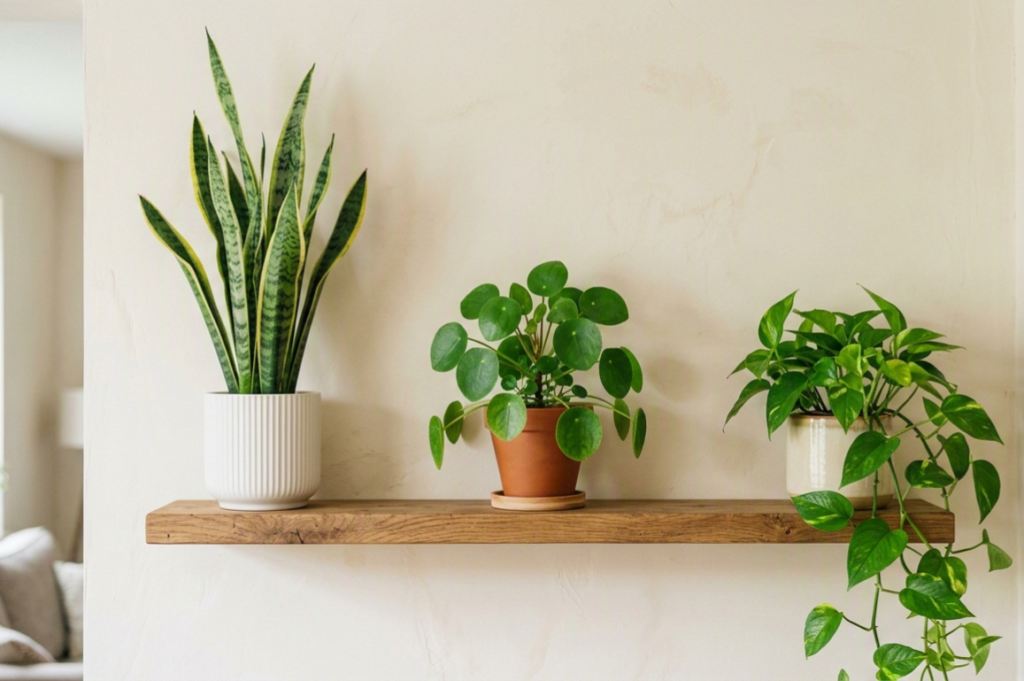
The human eye finds groupings of odd numbers more visually interesting than even ones. Two plants of similar size sitting side by side read as a matched pair — static and a little stiff. Add a third at a different height, and suddenly your eye has somewhere to travel.
This is one of the oldest tricks in interior design (it’s the same logic behind styling a bookshelf or a gallery wall), and it works just as well with houseplants. When you’re building an indoor plant arrangement, cluster plants in groups of three or five rather than pairs. If you only own two plants, add a third element — a candle, a small stack of books, or a piece of pottery — to complete the triangle.
2. Vary Heights for Depth and Drama
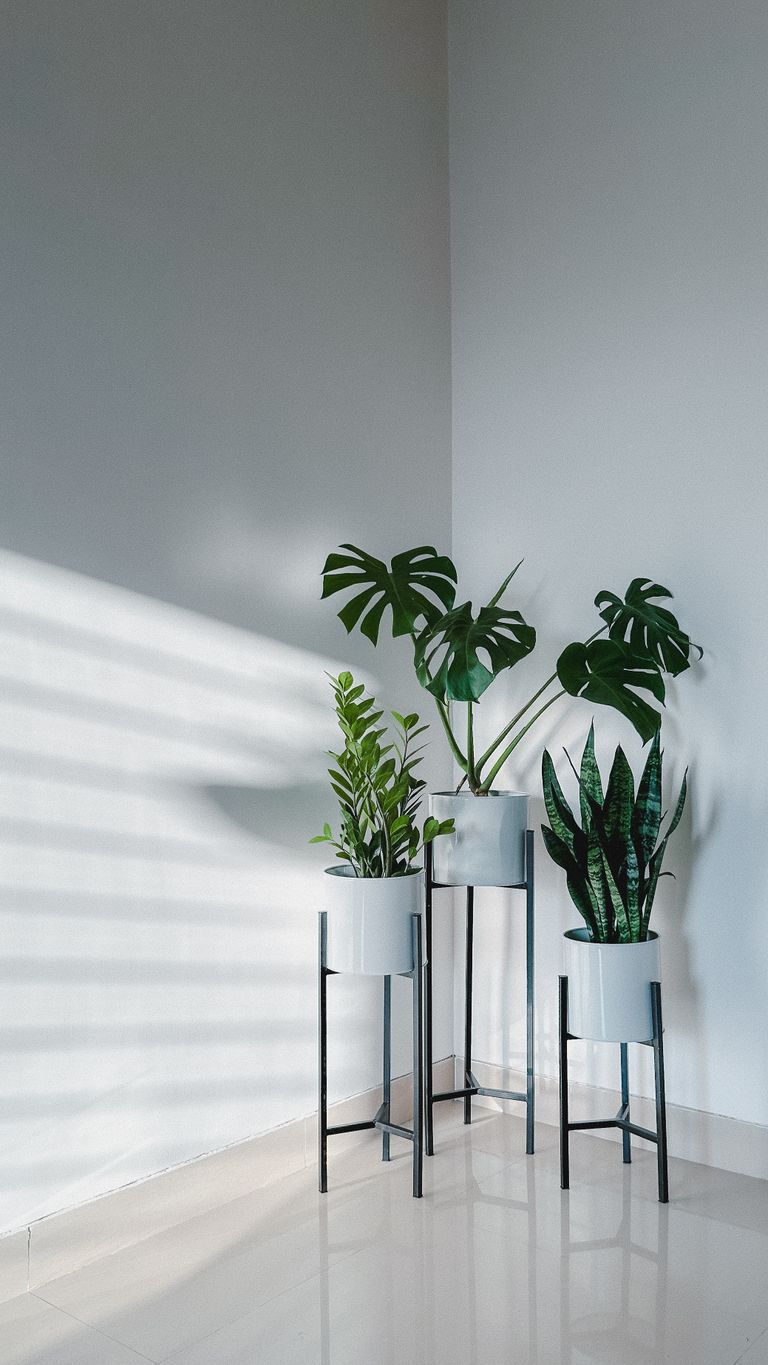
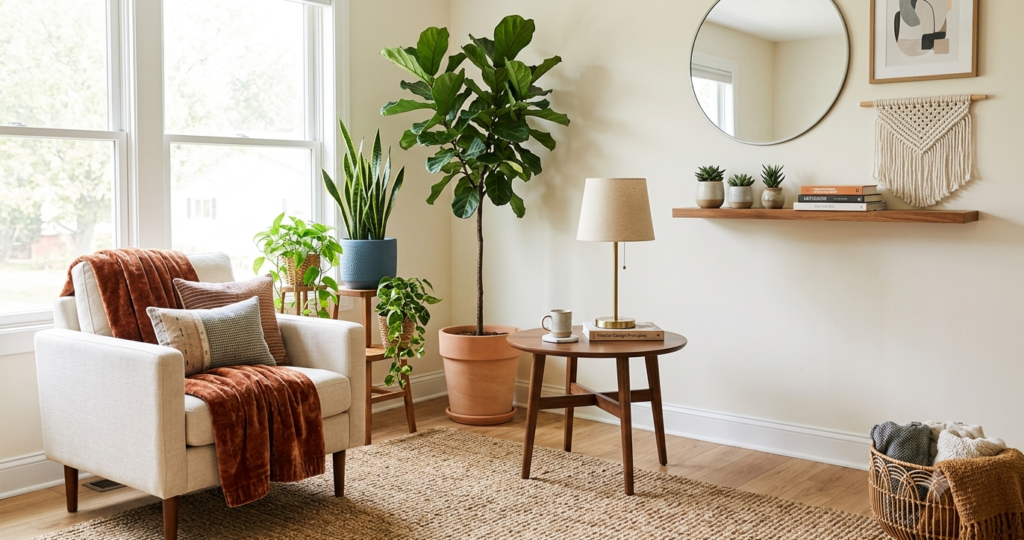
Nothing flattens a plant display faster than every pot sitting at the exact same height. Designers build in three visual tiers: something tall (a floor plant or plant stand), something medium (a tabletop or shelf-height plant), and something low or trailing (a plant that spills over the edge of a surface).
Think of it the way you’d think of layering a bookshelf: tall spine on one end, stacked books in the middle, a small object leaning against the stack. Plants follow the same visual logic. A raised plant stand or a stack of books under a pot is often all it takes to introduce a new height tier without buying a single new plant.
3. Mix Textures: Broad Leaves + Trailing + Spiky
Texture is what separates a styled corner from a plant collection. Designers combine at least three leaf shapes in every grouping:
- Broad and glossy — like a fiddle leaf fig, monstera, or rubber plant — to anchor the eye
- Trailing or cascading — like pothos, string of pearls, or philodendron — to soften hard edges and add movement
- Spiky or architectural — like snake plant, ZZ plant, or dracaena — to add contrast and structure
When all your plants have the same rounded, bushy silhouette, the grouping reads as “green blob” instead of intentional plant decor. Mixing textures is the single fastest upgrade you can make to an existing collection, because it costs nothing — you’re simply rearranging what you already own.
4. Let the Pot Earn Its Place
A plant is only as stylish as the container it’s standing in. Designers treat the pot as a decor object in its own right, not an afterthought that gets hidden behind foliage. That means matching the pot’s material, color, and finish to the rest of the room — and occasionally letting a striking pot be the star, with a simple, low-maintenance plant inside it.
We’ll go deeper on exactly which pot works for which aesthetic later in this guide, but the short version: your pots should feel like they were chosen by the same person who picked your throw pillows.
5. Create Negative Space — Don’t Overcrowd
This is the principle most plant lovers resist, and it’s the one that makes the biggest visual difference. A shelf with plants crammed into every inch feels chaotic no matter how beautiful each individual plant is. Designers deliberately leave breathing room — empty space next to a grouping — so the eye has somewhere to rest before it moves to the next vignette.
A simple test: if you can’t tell where one plant arrangement ends and the next begins, you need more negative space. Aim for your styled groupings to occupy roughly 60% of a surface, leaving the remaining 40% intentionally empty.
Room-by-Room Plant Styling Guide
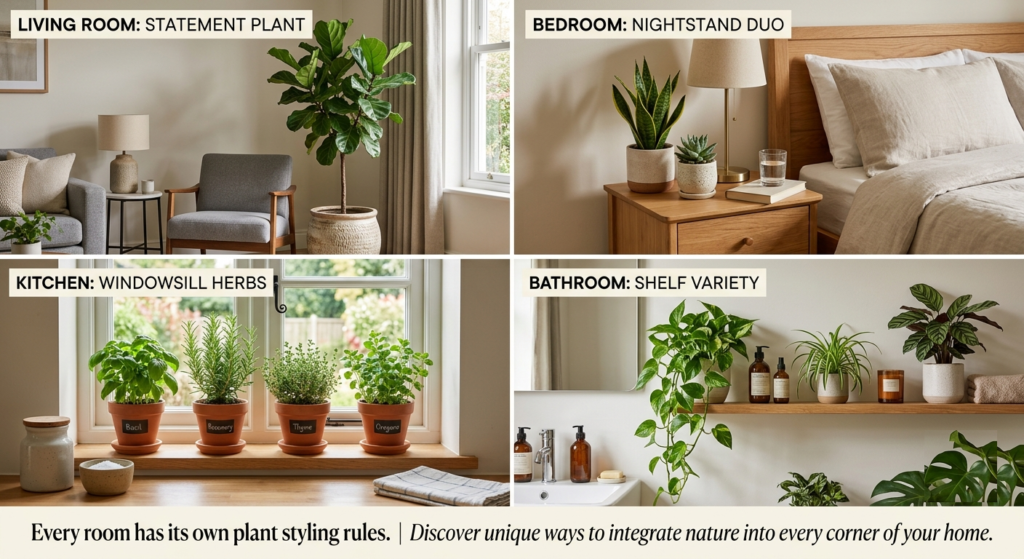
Knowing the five principles is only half the equation — the other half is knowing how to decorate with plants differently depending on the room. A styled living room corner and a styled bathroom shelf are solving two completely different problems: one is about drama, the other is about humidity and moisture tolerance.
Living Room — Creating Your Statement Arrangement
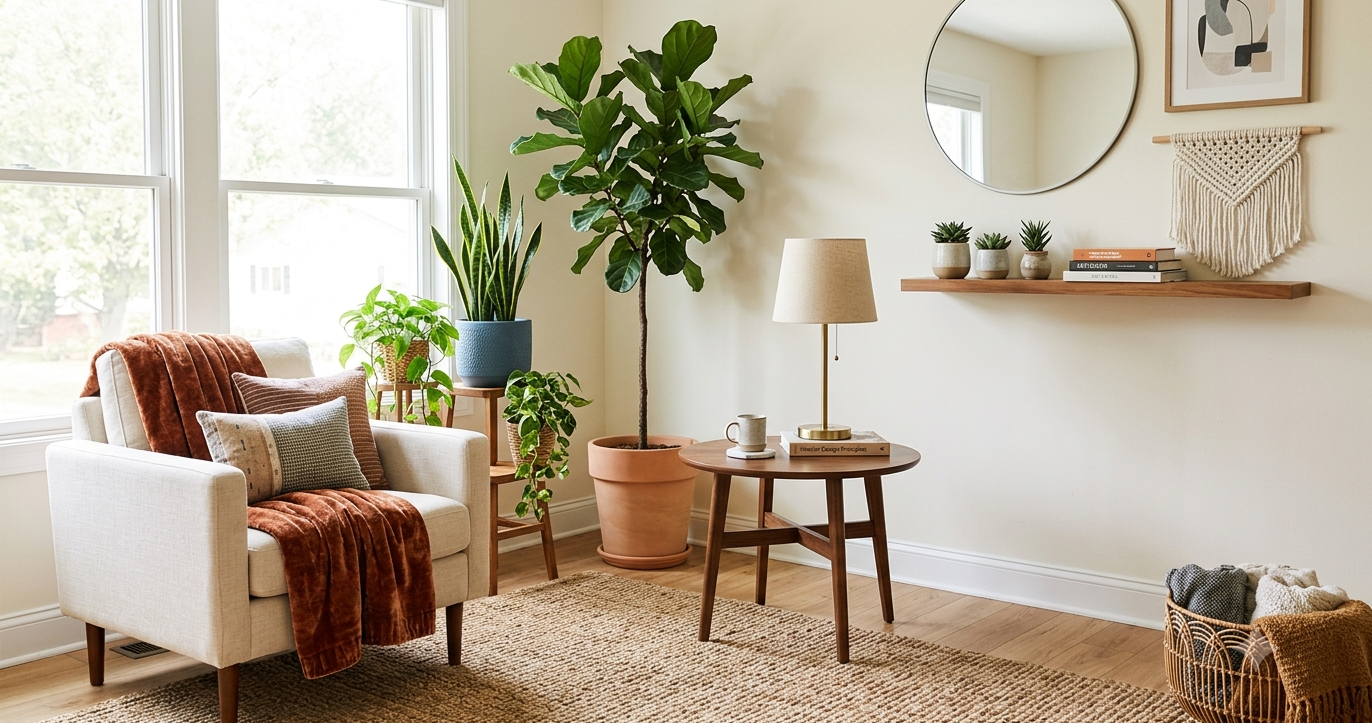
Your living room is where you can go big. This is the room for a floor-standing statement plant — a fiddle leaf fig, bird of paradise, or olive tree — placed in an empty corner where it can act almost like a piece of sculpture. Pair it with a mid-height plant on a side table and a trailing variety on a bookshelf to complete your three-tier height structure.
For a true designer look, cluster your statement plant with a plant stand of a slightly different height right beside it, rather than placing the pot directly on the floor. Elevating even one plant changes the entire visual rhythm of the room.
Bedroom — Calm, Low-Maintenance, and Oxygen-Rich
Bedrooms call for a quieter plant decor idea — softer textures, muted pots, and low-maintenance species that won’t demand attention (literally or visually) while you’re trying to unwind. Snake plants, pothos, and peace lilies are popular bedroom choices because they tolerate lower light and irregular watering.
Keep the palette restrained: one or two plants on a nightstand or dresser, styled at different heights, is usually enough. A crowded bedroom shelf works against the calm you’re trying to create.
Kitchen — Herbs, Succulents, and Trailing Greenery
Kitchens reward function-first styling. A row of herbs in matching terracotta pots on a windowsill is both decor and a working ingredient station. Above cabinets, trailing pothos or ivy softens hard, boxy lines. Succulents work well on open shelving since they tolerate the temperature swings near a stove or oven.
Repetition is your friend here — three identical basil, thyme, and mint pots in a row read as styled, while three mismatched pots read as clutter.
Bathroom — High-Humidity Lovers and Spa Aesthetics
Bathrooms are naturally humid, which makes them a good home for ferns, calatheas, and other moisture-loving plants — with one caveat. Bathrooms frequently lack the bright, indirect light these plants also need, so the humidity boost only helps if there’s a window nearby.
According to horticulture extension researchers, the humidity a bathroom provides is genuinely inconsistent — it depends heavily on how often the shower runs and whether the room has a window at all, so it shouldn’t be treated as a guaranteed fix for humidity-loving plants.
For styling, lean into the spa feel: woven baskets, neutral stone-look pots, and a single trailing plant near the tub go a long way toward an intentional, hotel-bathroom aesthetic.
Home Office — Focus-Enhancing Greenery
Desk plants should be small enough not to compete with your monitor but architectural enough to add visual interest during video calls. A single snake plant or ZZ plant in a sculptural ceramic pot is the classic “backdrop plant” you see behind people on camera for a reason — it reads as put-together without demanding care.
If your desk sits against a wall, add a trailing plant on a nearby shelf above eye level to draw the eye upward and make the room feel taller.
Hallway — Making a First Impression
Hallways are transitional spaces, so plant decor here should feel like a punctuation mark, not a paragraph. A single tall plant in a bold pot near the entryway, or a slim console table with a trio of plants at staggered heights, sets the tone for the rest of the home without cluttering a walkway.
Quick-Reference: Best Plants by Room
| Room | Light Level | Best Plants | Styling Tip |
| Living Room | Bright, indirect | Fiddle leaf fig, bird of paradise, monstera | Statement floor plant + plant stand |
| Bedroom | Low to medium | Snake plant, pothos, peace lily | One or two calm, low-maintenance pieces |
| Kitchen | Medium, variable temp | Basil, thyme, succulents, pothos | Matching pots in a row for repetition |
| Bathroom | Low, high humidity | Ferns, calathea, spider plant | Woven baskets, spa-neutral tones |
| Home Office | Medium, indirect | ZZ plant, snake plant, pothos | One sculptural desk plant, one shelf trailer |
| Hallway | Varies (often low) | ZZ plant, cast iron plant, pothos | Single bold statement piece |
Plant Stand & Shelf Styling: A Visual Guide
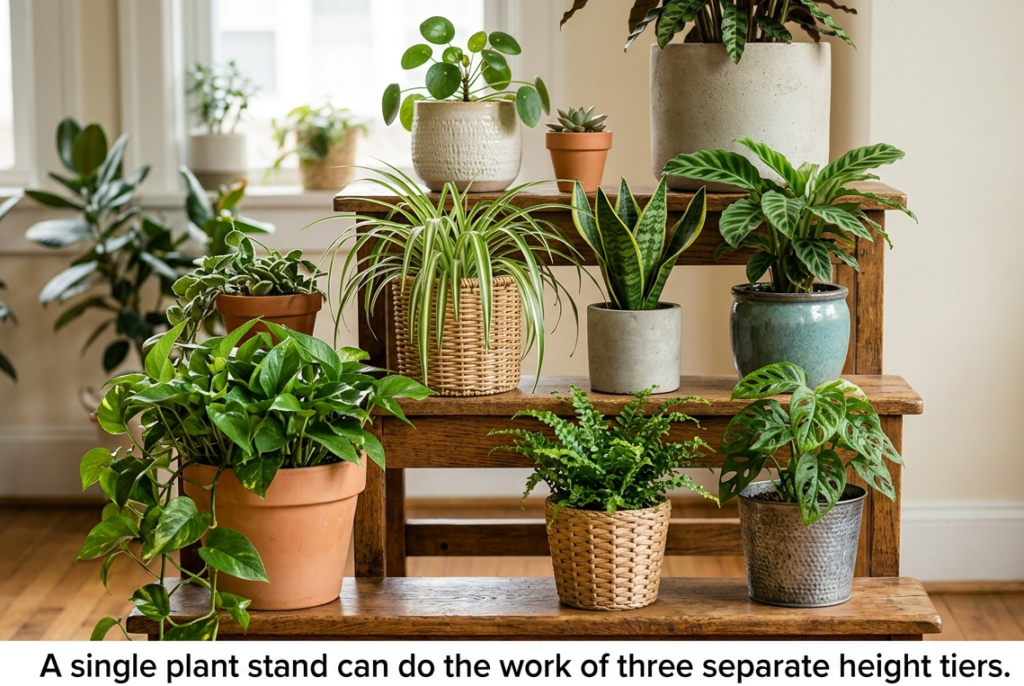
Plant stands and shelves are the unsung heroes of indoor plant styling ideas because they solve the height-variation problem instantly. Rather than buying taller plants, you simply raise the ones you have.
A few designer-approved combinations to try:
- A tiered plant stand (2–3 levels) styled with a trailing plant on top, a bushy mid-size plant in the middle, and a small architectural plant on the bottom
- A wall-mounted shelf with plants grouped in threes, alternating pot materials (one ceramic, one woven, one terracotta) to avoid visual monotony
- A macramé hanger positioned at a different height than the nearest floor or tabletop plant, so the eye travels vertically as well as horizontally
- A ladder-style shelf angled in a corner, which naturally creates the tall-medium-low tiering designers rely on
The goal with any stand or shelf is the same: never let two plants sit at identical heights next to each other. Stagger everything, even by just a few inches.
Choosing the Right Pot for the Right Plant (And Aesthetic)
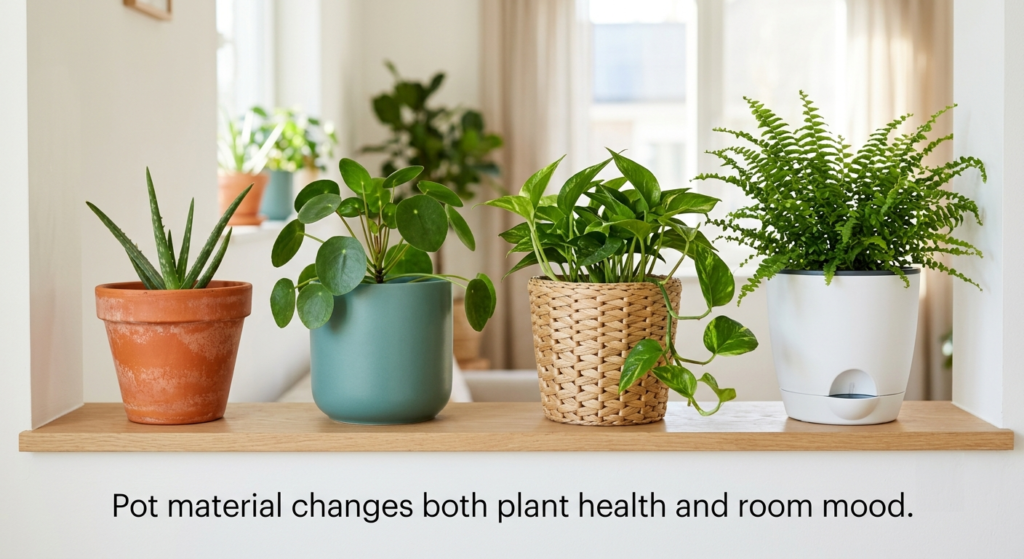
Pot choice isn’t just about drainage — although that matters too. It’s one of the fastest ways to shift a room’s entire mood. Here’s how designers think about the four most common pot materials.
Terracotta — Earthy and Breathable
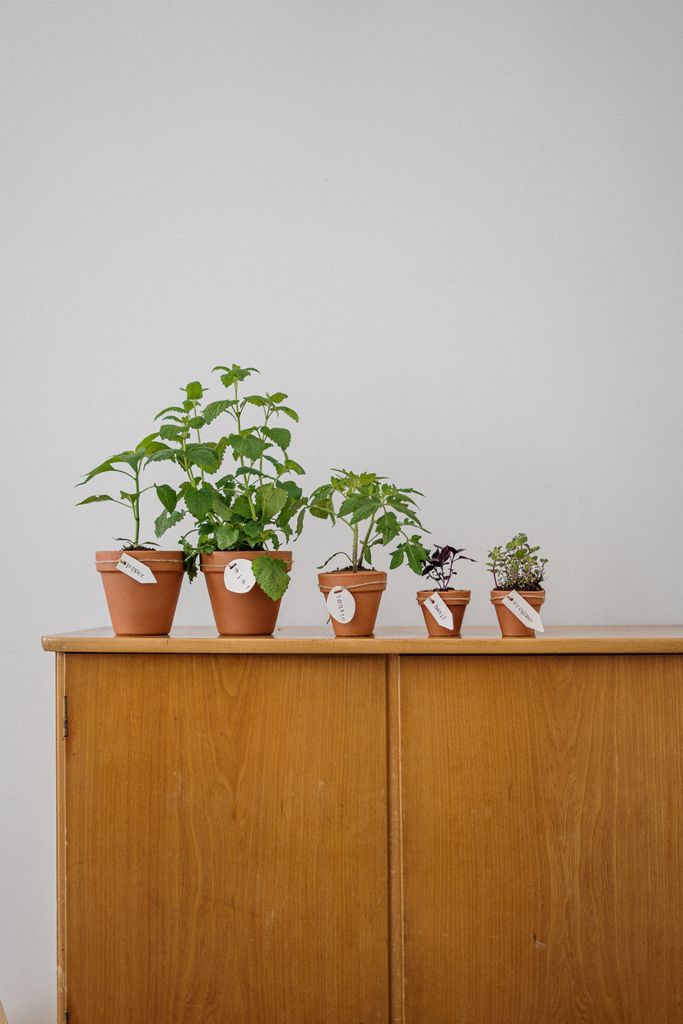
Terracotta is porous, which helps excess moisture evaporate and makes it genuinely useful for plants that hate wet feet, like succulents and herbs. Aesthetically, it leans warm, rustic, and Mediterranean — a natural fit for kitchens, sunrooms, and boho-styled spaces.
Ceramic — The Polished Statement
Glazed ceramic pots read as intentional and finished. Because they come in nearly every color and finish, they’re the easiest way to tie a plant into an existing color palette. Ceramic is heavier and non-porous, so it holds moisture longer — better suited to plants that like consistent dampness, like ferns and peace lilies.
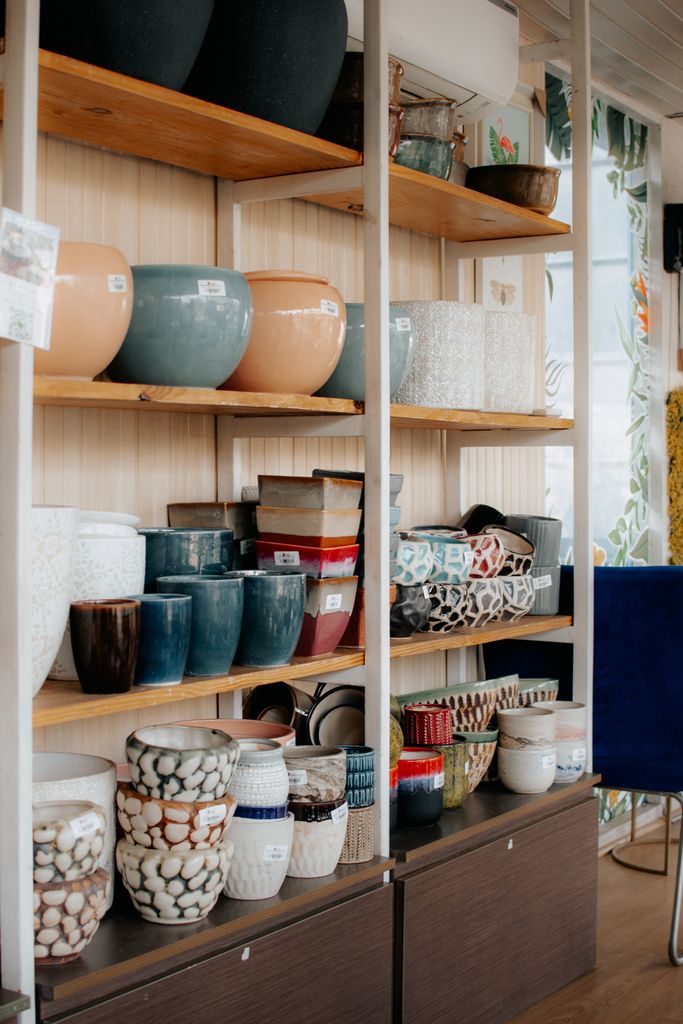
Woven Baskets — The Boho Essential
A woven or rattan basket (usually used as a cover pot over a plastic nursery pot) instantly softens a space and adds texture without competing with the plant itself. This is the go-to choice for bathroom and bedroom styling, where a more organic, relaxed look is the goal.
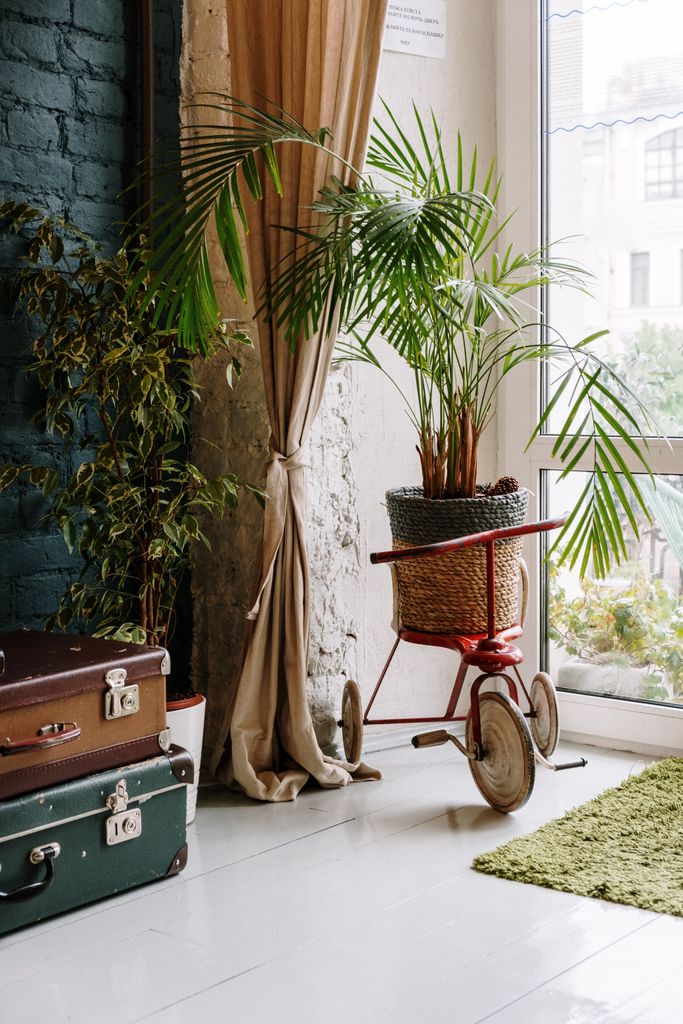
Self-Watering Pots — Function Meets Form
Self-watering pots use a reservoir system to wick moisture up to the roots, which is genuinely useful for frequent travelers or notoriously forgetful waterers. Modern versions have shed the clinical, plastic look of older models and now come in matte ceramic and stoneware finishes that hold their own stylistically.
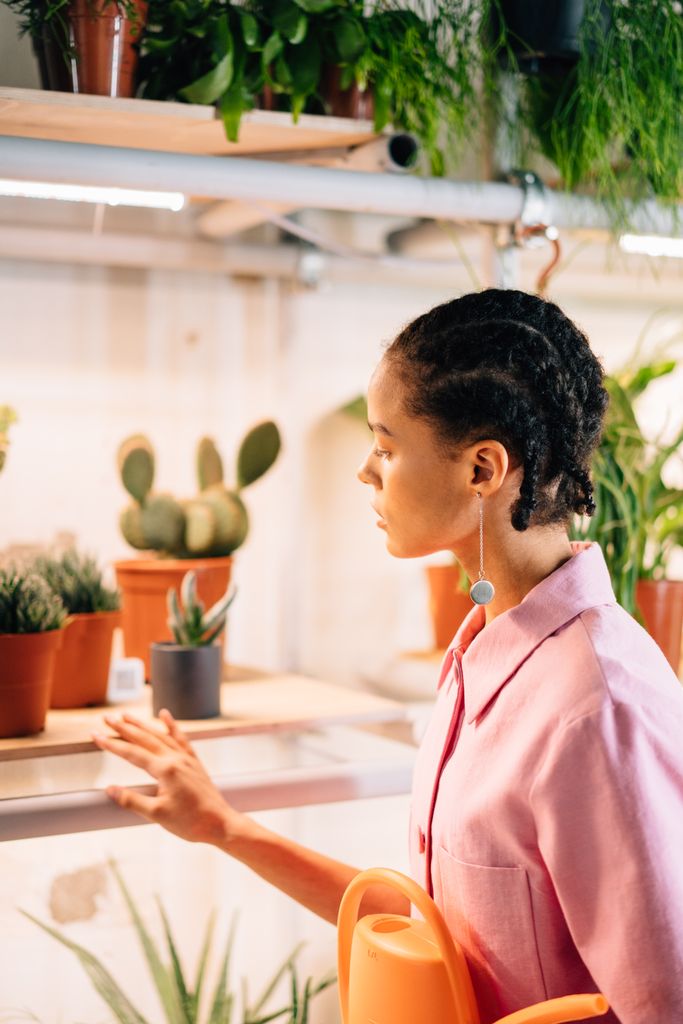
Pot Material Comparison
| Pot Type | Drainage Profile | Best For | Aesthetic |
| Terracotta | Porous, breathable, quick-drying | Succulents, cacti, herbs | Earthy / Mediterranean / Boho |
| Ceramic | Non-porous, retains moisture | Ferns, peace lily, monstera | Modern / Polished / Eclectic |
| Woven Basket | Cover pot, moderate airflow | Any plant in a plastic nursery pot | Boho / Coastal / Relaxed |
| Self-Watering | Reservoir system, consistent moisture | Busy households, travelers | Minimalist / Scandinavian |
Common Plant Styling Mistakes to Avoid
Even with the right principles in mind, a few habits quietly undercut an otherwise good indoor plant arrangement. Here are the ones designers flag most often:
- Matching pots too literally — using the exact same pot for every plant removes texture variety and can look more like a display shelf at a garden store than a styled home.
- Ignoring scale — a tiny plant in an oversized pot (or vice versa) throws off the visual balance of an entire grouping.
- Styling for the photo, not the plant — pushing a low-light plant into a dark corner for symmetry is a design choice your plant won’t survive.
- Skipping the “stand back” test — designers regularly step back ten feet and squint at a vignette to check the silhouette before fussing over small details up close.
- Forgetting the room’s existing color palette — a bright pot that clashes with your walls or furniture will always look like an afterthought, no matter how well the plants themselves are arranged.
Do Indoor Plants Really Purify the Air? What the Research Actually Says
Part of the appeal of biophilic home design is the promise of cleaner indoor air, largely thanks to a famous 1989 NASA study that tested how houseplants absorbed volatile organic compounds inside small, sealed chambers. It’s one of the most repeated facts in the plant world — and it’s also, according to more recent analysis, widely overstated.
A peer-reviewed review published in the Journal of Exposure Science and Environmental Epidemiology recalculated NASA’s findings against a real home environment and concluded that a 1,500-square-foot house would need roughly 680 houseplants to match the air-purifying effect measured in NASA’s sealed test chamber — far more than any styled room could reasonably hold.
That doesn’t mean houseplants are pointless — research consistently links greenery to lower stress, better focus, and improved mood, which is arguably the bigger reason biophilic design caught on in the first place. It just means you shouldn’t skip your air purifier in favor of a fiddle leaf fig. Style your plants for how they make a room feel, not as a stand-in for ventilation.
Source: American Lung Association, on the NASA Clean Air Study re-analysis: https://www.lung.org/blog/houseplants-dont-clean-air
Further reading: Clean Air Gardening, a deeper breakdown of the original 1989 NASA methodology: https://www.cleanairgardening.com/do-houseplants-clean-air/
Seasonal Plant Styling: Keeping Your Arrangement Fresh Year-Round
A styled plant corner shouldn’t be static. Designers refresh vignettes seasonally the same way they’d swap out throw pillows or table linens:
- Spring/Summer — lean into brighter, glazed pots and add one flowering plant (like an orchid or begonia) to an otherwise foliage-only grouping.
- Fall — swap in warmer terracotta and stoneware tones; a small pumpkin or gourd tucked among pots adds seasonal texture without looking themed.
- Winter — group plants slightly closer together near a heat source-free window; grouping genuinely does raise humidity in the immediate area around the plants, which helps offset dry winter heating.
Rotating two or three “accent” pieces — a vase, a candle, a small stack of books — through your plant groupings each season keeps a styled shelf from feeling frozen in time, without requiring you to buy new plants every few months.
Source: University of New Hampshire Extension, on grouping plants to raise humidity in winter: https://extension.unh.edu/blog/2025/01/how-can-i-increase-humidity-indoors-my-houseplants
FAQ: Indoor Plant Styling Ideas
Final Thoughts: Styling Is a Skill, Not a Budget
None of the ideas in this guide require an expensive plant collection or a designer’s budget. The rule of three, height variation, texture mixing, thoughtful pots, and negative space are all things you can apply this afternoon using plants you already own.
The next time you catch yourself scrolling for more indoor plant styling ideas, try rearranging what’s already in your home first. Group your plants in threes, stagger the heights, mix in one trailing variety, and step back. That’s the entire system — the same one every well-styled, magazine-worthy room is quietly built on.
References & Further Reading
- Penn State Extension — Humidity and Houseplants — https://extension.psu.edu/humidity-and-houseplants
- University of Arizona Cooperative Extension — Interior Plant Selection and Care — https://extension.arizona.edu/publication/interior-plant-selection-and-care
- University of New Hampshire Extension — Increasing Indoor Humidity for Houseplants — https://extension.unh.edu/blog/2025/01/how-can-i-increase-humidity-indoors-my-houseplants
- American Lung Association — Houseplants and Air Quality, Re-examined — https://www.lung.org/blog/houseplants-dont-clean-air
- Clean Air Gardening — What the NASA Clean Air Study Actually Found — https://www.cleanairgardening.com/do-houseplants-clean-air/